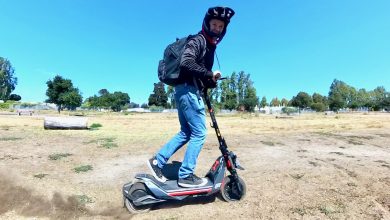
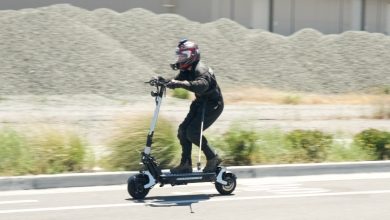
Electric Skateboard vs Electric Scooter: The Ultimate 2025 Comparison Guide
Personal electric vehicles have exploded in popularity over the last decade—but if you’re choosing between an electric skateboard and an electric scooter, the differences can be massive. After riding and testing 100+ electric skateboards, scooters, and other PEVs over the past five years, I’ve discovered that each category shines in very different ways.
This in-depth guide breaks down the real-world pros, cons, performance, safety, and ride feel of each so you can confidently choose the right vehicle for your commute, lifestyle, or adrenaline needs.
Table of Contents
Best Electric Skateboards & Scooters for Each Skill Level (2025)
Best Beginner Electric Skateboard: MEEPO V5
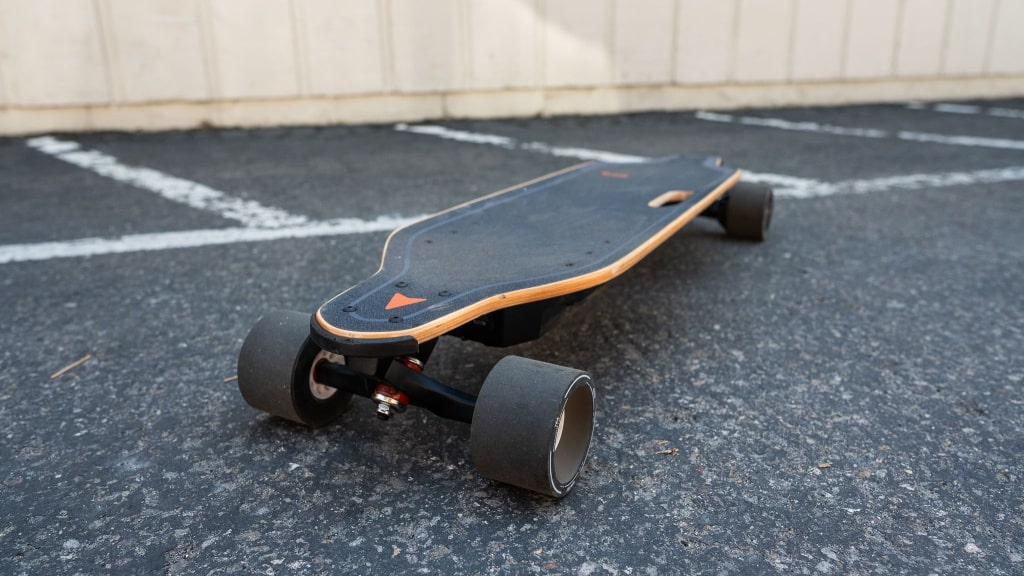
MEEPO V5
28 mph top speed, Customizable RGB remote, Dual-channel connectivity, Reliable battery and ESC.
Perfect for new riders who want stability and value.
Best Beginner Electric Scooter: Fifth Wheel G11 Pro
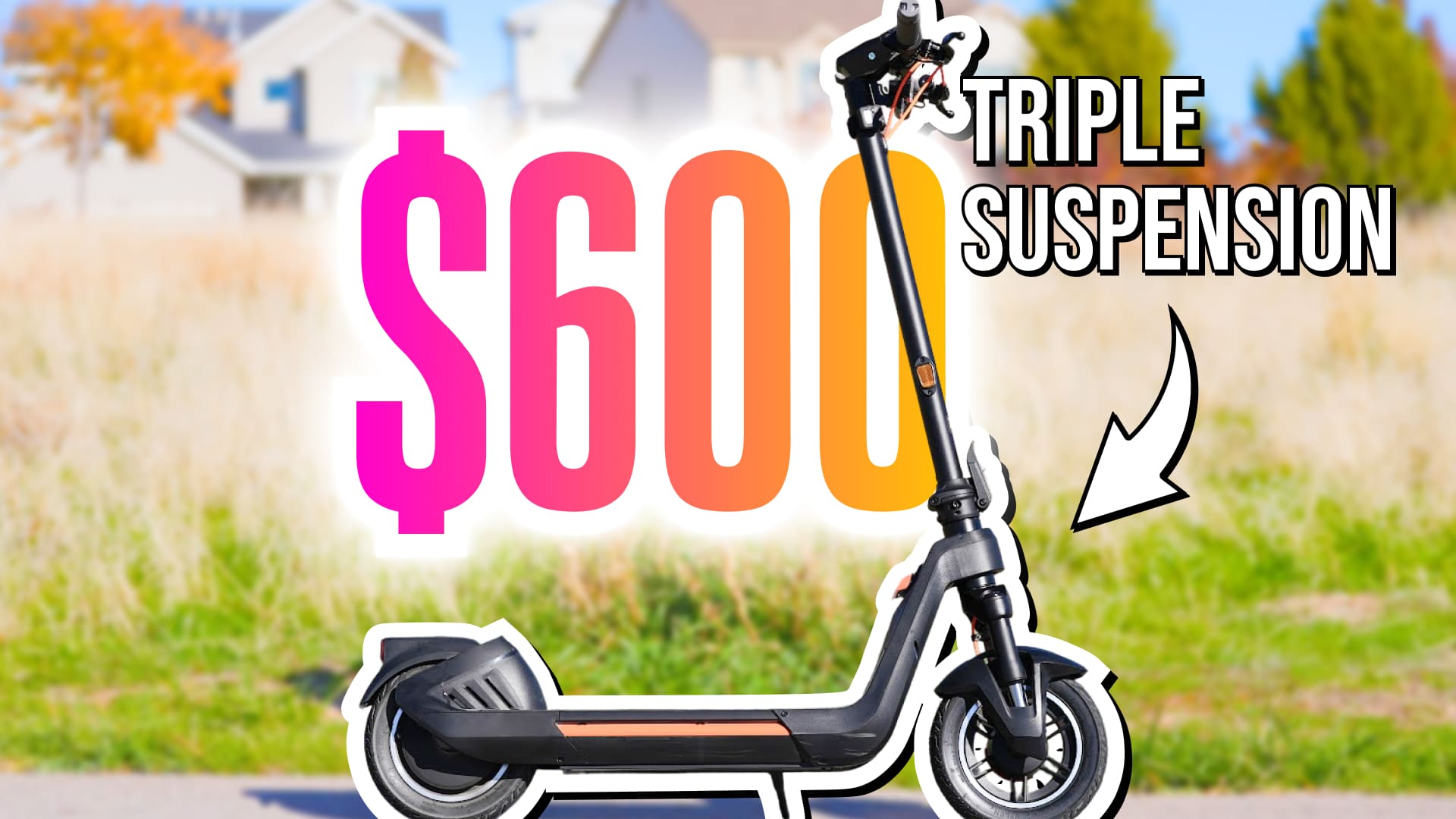
Fifth Wheel G11 Pro
Extremely stable, Plush ride, Oversized 11-inch tires, Built-in charger. One of the most confidence-inspiring beginner scooters available.
Best Intermediate Electric Skateboard: Exway Atlas V2
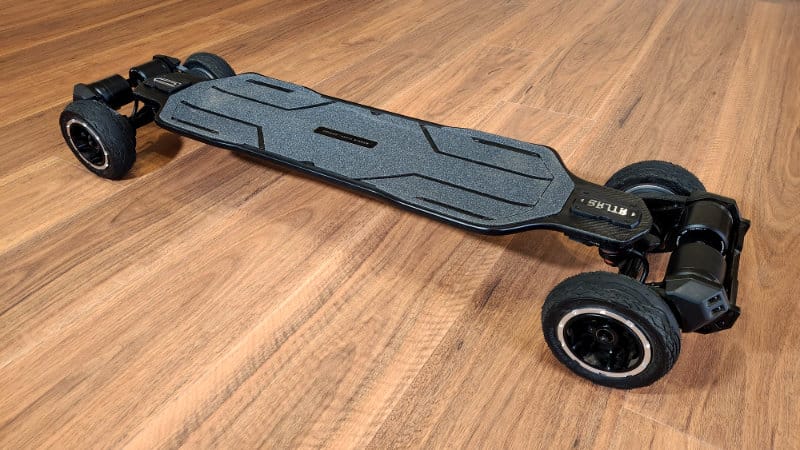
Exway Atlas V2
Upgraded motors, Large accessory ecosystem, Off-road or street capable, Extension batteries, mudguards, handrails, smart chargers.
A do-everything board for serious riders.
Best Intermediate Electric Scooter: Hiley Tiger Supra
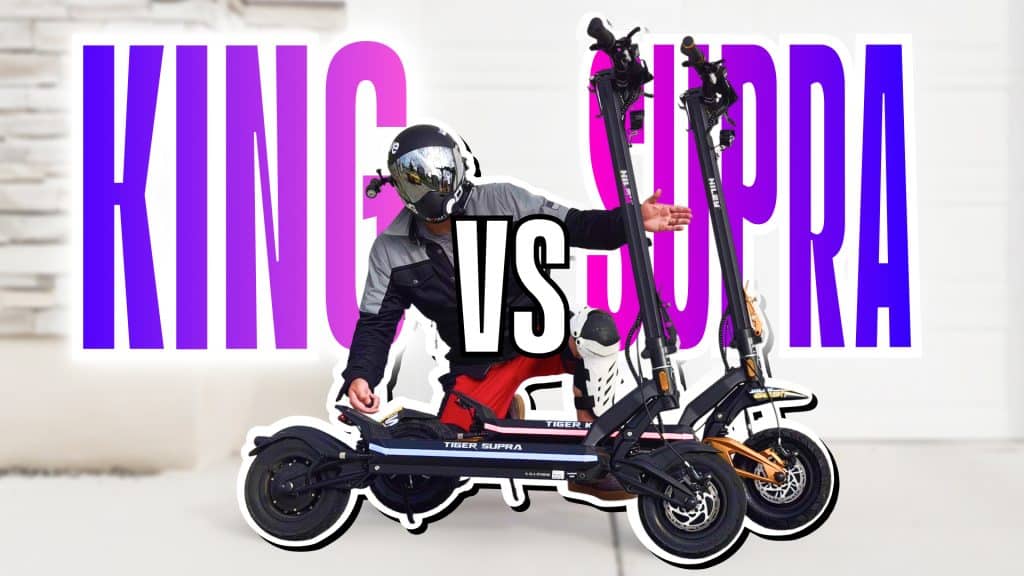
Hiley Tiger Supra
Dual-drive 4,700W
Smooth 60V system, Fantastic suspension, Hyper-scooter feel without the harshness.
Balanced power and ride quality.
Best Advanced Electric Skateboard: REV Phantom X
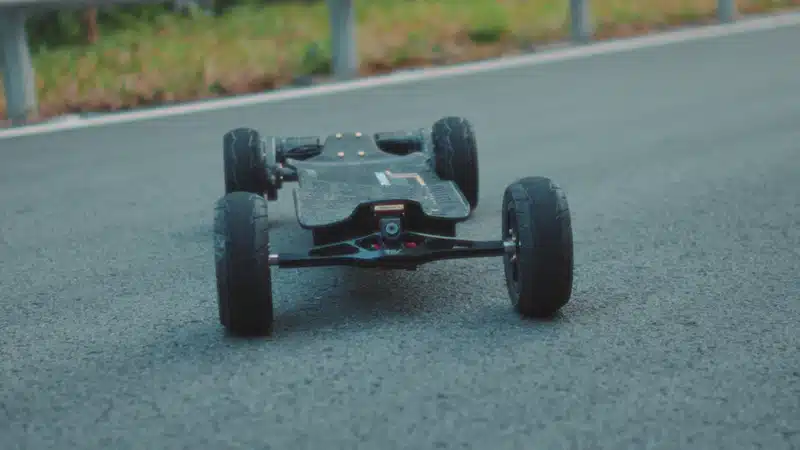
REV Phantom X
Most powerful production e-skate, Dual-ESC architecture, Full VESC tuning, Peak 200A per ESC.
For experts who want ultimate performance and adjustability.
Best Advanced Electric Scooter: Inmotion RS

Inmotion RS
Adjustable ride height, Excellent stability at high speed, Hyper-scooter performance. The only scooter that can physically lower itself for high-speed riding.
Electric Skateboard vs Electric Scooter at a Glance
- Scooters = more stable, faster top speeds, and better utility
- Electric skateboards = more portable, more torque, and more fun to carve
- Scooters excel at commuting, skateboards excel at pure ride enjoyment
1. Speed: Which Is Faster?
Top Speed
- Electric skateboards: ~20–30 mph typical, ~50 mph max
- Electric scooters: ~30–40 mph typical, up to ~80 mph max
Scooters dominate raw top speed. Their gyroscopic stability makes high-speed riding far safer than a skateboard’s bushing-based turning system, which becomes twitchy past 30 mph.
2. Stability: Scooters Win (By a Lot)
Electric skateboards use bushings, which are fantastic for carving but become unstable at high speeds. Even with stiff bushings, 30+ mph can feel sketchy.
Electric scooters act like mini motorcycles, benefiting from:
- larger wheels
- a rigid chassis
- natural gyroscopic stability
Result: scooters remain stable at high speeds, while skateboards rely more heavily on rider skill.
3. Torque & Acceleration: Skateboards Are Insane
This is the category where electric skateboards absolutely dominate.
Many mid-range boards using belt-drive outrunner motors can out-accelerate scooters that cost twice as much.
Example:
- $2,000 electric skateboard:
- 0–20 mph in 2.2 seconds
- 0–30 mph in 3.5 seconds
- $4,000 electric scooters:
- 0–20 mph ≈ 3.5 seconds
- 0–30 mph ≈ 4.5 seconds
If you’re chasing that punchy, throw-you-back torque, skateboards win every time.
4. Portability: No Contest
Electric Skateboards
- 15–20 lb for lightweight boards
- 30–50 lb for heavy duty models
- Easy to carry, store, or take into buildings
Electric Scooters
- Start around 40 lb
- Many hyper scooters exceed 100 lb
- Awkward to carry and store
For last-mile commuting, skateboards are vastly more convenient.
5. Range & Energy Efficiency
Electric skateboards are surprisingly efficient thanks to:
- smaller wheels
- lighter frames
- lower rolling resistance
Example range using the same 500Wh battery:
- Electric scooter: ~12 miles
- Electric skateboard: ~24 miles (street wheels) / 17 miles (pneumatic wheels)
6. Braking: Scooters Are Better
Scooters typically use:
- mechanical disc brakes or
- drum brakes + regen braking
Skateboards rely entirely on regenerative braking, which works well at lower speeds but depends on rider balance and lean.
Scooters stop faster and more reliably.
7. Reverse Functionality
- Electric skateboards: Can reverse (instant or via a toggle)
- Electric scooters: Cannot reverse
Simple, but surprisingly useful.
8. Throttle & Control Differences
Scooters
- Hard-wired thumb, trigger, or twist throttles
- Very reliable
Skateboards
- Wireless hand remotes (thumbwheel)
- Modern boards use multi-channel frequencies to reduce dropouts, but interference is still possible
9. Battery Specs & Charging
Skateboards
- Batteries advertised in watt-hours (Wh)—more accurate
- Fast charging: 4A–15A, typically 1–3 hours
Scooters
- Often listed in amp-hours (Ah)
- Most still use slow 2A chargers, requiring overnight charging
10. Suspension, Lights & Practical Features
Suspension
- Scooters: Even $400 models have suspension
- Skateboards: Rare and costly ($1,000–$2,000+)
Lights
- Scooters: Bright headlights, taillights, turn signals
- Skateboards: Often rely on helmet or handheld lights
Fenders
- Scooters: Standard
- Skateboards: Almost never → prepare for mud stripes down your back
11. Maintenance: Skateboards Are Easier
- Skateboard tire swap: 5–10 minutes
- Scooter tire swap: Often an ordeal requiring tools, strength, and planetary alignment
12. Noise
- Scooters (hub motors): ~60 dB → very quiet
- Skateboards (belt drives): Noisy
- Gear drives: quieter but still louder than scooters
13. Ride Feel & Fun Factor
This is where skateboards become irresistible.
Because they use bushings and flexible decks, electric skateboards offer:
- rebound
- carving flow
- a surfing-on-pavement sensation
Scooters can swerve, but they cannot carve.
14. Size, Storage & Travel
- Skateboards: Fit in trunks, lockers, and some are airplane-friendly
- Scooters: Bulky and expensive to ship
15. Comfort & Accessibility
If you have back or leg issues, scooters are far better—especially with a seat installed.
16. Security
- Skateboards: Essentially no security features → bring them inside
- Scooters: Some models include NFC, passwords, alarms, or wheel locks
17. The “Cool Factor”
Like it or not:
- Skateboards: Universally seen as cool
- Scooters: Some people still think they look lame
Skate culture wins this one.
Conclusion: Should You Buy an Electric Skateboard or an Electric Scooter?
Choose an Electric Scooter if you want:
- Maximum stability
- Higher top speed
- Better braking
- Practical commuting
- All-weather capability (fenders, lights, suspension)
Scooters are the logical, utility-driven choice.
Choose an Electric Skateboard if you want:
- The most fun ride possible
- Fast acceleration
- Easy portability
- Carving and surfing sensation
- A lightweight PEV you can carry anywhere
Skateboards are the emotional choice—the one that makes you feel alive.
Final Thought
I love both categories—hyper scooters, commuters, mountain boards, and everything in between. Each one fills a different role, and there’s no wrong choice depending on your priority.
Not the PEV for you? Check out our database