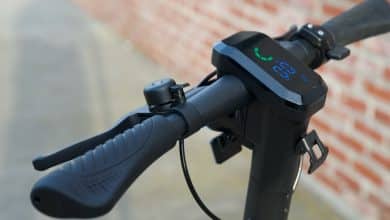
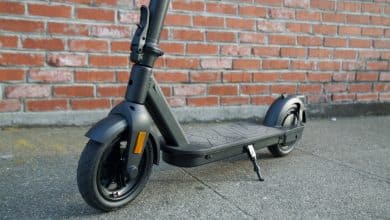
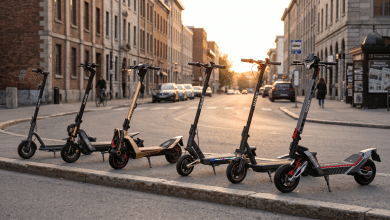
Electric Scooter Lineup: Apollo Scooters
6 Years Of Testing Every Apollo Scooter So You Don’t Have To
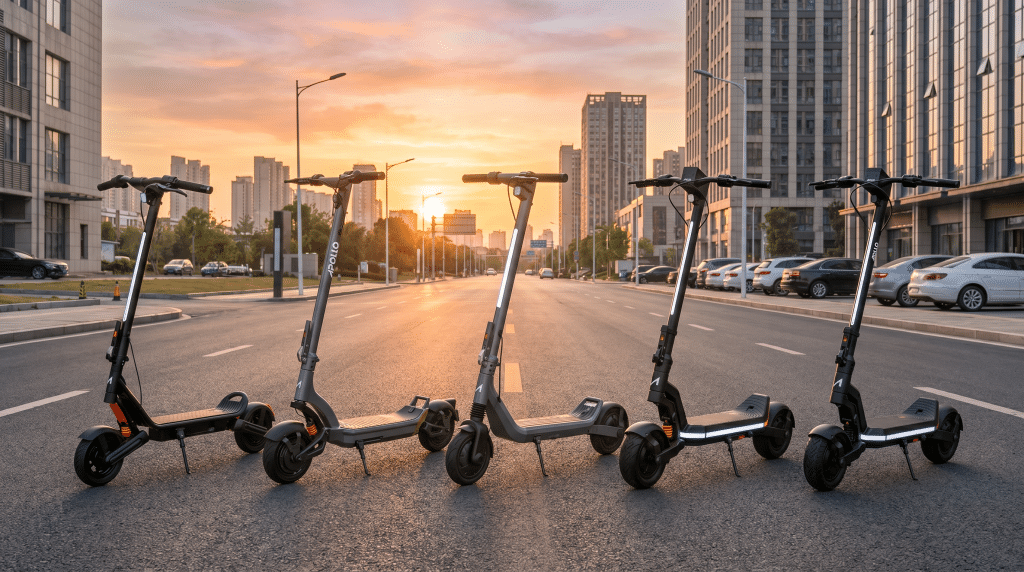
We’ve been reviewing Apollo scooters for basically the entire modern electric scooter era.
Seriously.
For the last 6 years, we’ve tested pretty much every major Apollo model released, from the original Explore and City all the way to the newest Apollo Go, Phantom lineup, and Apollo’s latest flagship releases. We’ve range tested them, hill climbed them, drag raced them, brake tested them, commuted on them, and occasionally questioned our life choices while carrying some of them up stairs.
And honestly, watching Apollo evolve over the years has been interesting because the company has gradually shifted from simply selling scooters with good specs to trying to build a full ecosystem around ride feel, software, safety systems, lighting and overall premium feel. Also, in our opinion, one of the biggest things that consistently separates Apollo scooters from the competition is their thumb-operated regenerative braking system. After years of testing scooters from nearly every major brand, Apollo’s regen tuning still stands out as one of the smoothest, strongest, and most confidence-inspiring setups in the industry.
We also got to see Apollo’s newest lineup in person at CES this year, including the latest versions of the Go, Phantom lineup, and Apollo’s newest ecosystem updates. You can check out our full CES walkthrough here:
Today, Apollo’s lineup stretches from relatively lightweight urban commuters all the way to full hyperscooters capable of 50 mph. And while there are definitely a lot of models now, the lineup actually makes more sense once you understand who each scooter is designed for.
Because if you’re willing to do a little research — which is exactly why you’re here — you can lock in a scooter that fits your riding style way better than settling for some random scooter that kinda-sorta does everything.
The lineup currently ranges from around $1000 commuter scooters all the way to $3000+ flagship hyper scooters. Lightweight apartment-friendly commuters, dual-motor city rockets, lightweight suspension cruisers, and full enthusiast machines… Apollo now has a scooter for basically every type of rider.
And unlike some companies that only chase crazy wattage numbers, Apollo has consistently focused on:
- Ride quality
- Suspension refinement
- App integration
- Lighting systems
- Silky Smooth Regen braking
- Stability
- Smart safety features
Sometimes even more than raw spec-sheet flexing.
So let’s break down the entire current Apollo lineup and explain where every scooter actually fits in today’s market.
Table of Contents
Apollo’s Current Lineup Simplified
| Scooter | Category | Speed Range | Weight Class | Main Focus |
|---|---|---|---|---|
| Apollo Dash | Lightweight commuter | ~18 mph | ~38 lbs | Portability |
| Apollo Go | Compact dual-motor commuter | ~28 mph | ~46 lbs | Portable performance |
| Apollo City | Premium commuter | ~32 mph | ~65 lbs | Best overall balance |
| Apollo Explore 2 | Long-range commuter | ~31 mph | ~60 lbs | Range & comfort |
| Apollo Phantom 2.0 | Enthusiast performance scooter | ~44 mph | ~102 lbs | Aggressive riding |
| Apollo Phantom Stellar | Luxury hyperscooter | ~50+ mph | ~107+ lbs | Ultimate refinement |
Apollo Dash

The Lightweight Urban Commuter
- Top Speed: ~25 mph
- Claimed Range: ~20-25 miles
- Weight: ~43
- MSRP: ~$649
- Motor: Single rear motor
- Tire Size: 10″
- Best For:
- Apartment commuters
- Students
- Last-mile riders
- Riders prioritizing portability
The Dash is Apollo’s answer to the growing lightweight commuter category.
And honestly, this category matters more than hardcore scooter nerds sometimes want to admit.
Because while giant 90-pound hyperscooters are fun, most normal riders still care about:
- Carrying scooters upstairs
- Folding them into trunks
- Bringing them into offices
- Taking them on transit
At ~43 lbs, the Dash stays genuinely manageable.
Compared to industry averages:
- Lighter than most premium commuters
- Larger tires than many ultra-light scooters
- Better ride quality than rental-style scooters
- Cleaner integration and lighting than most entry-level competitors
This is the type of scooter that makes sense for riders who prioritize practicality over pure speed.
Apollo Go
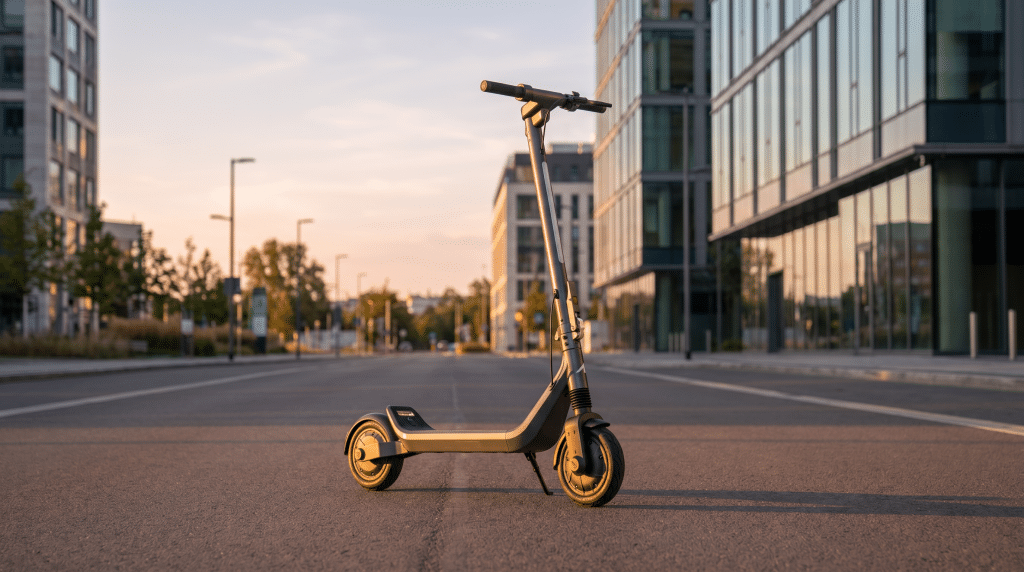
The “Portable But Actually Fast & Smooth” Scooter
- Top Speed: ~28 mph
- Claimed Range: ~30 miles
- Weight: ~46 lbs
- MSRP: ~$849
- Motors: Dual 350W motors
- Suspension: Dual suspension
- Tire Size: 9″
- Standout Features:
- Dual motors under 50 lbs
- Self-healing tires
- Turn signals
- Apollo app integration
- Better hill climbing than most compact scooters
Honestly, this might be one of the smartest scooters Apollo has ever released.
Why?
Because most dual-motor scooters instantly jump into the 70-100 lb category.
The Go gives riders:
- Dual-motor acceleration
- Better hill climbing
- More aggressive launches
- Faster urban riding
while still remaining genuinely portable.
That’s rare.
Compared to industry averages:
- Extremely light for dual motors
- Faster than most compact commuters
- Better ride quality than many lightweight performance scooters
- Much more approachable than full hyperscooters
For a lot of city riders, this honestly might be the sweet spot.
Apollo City
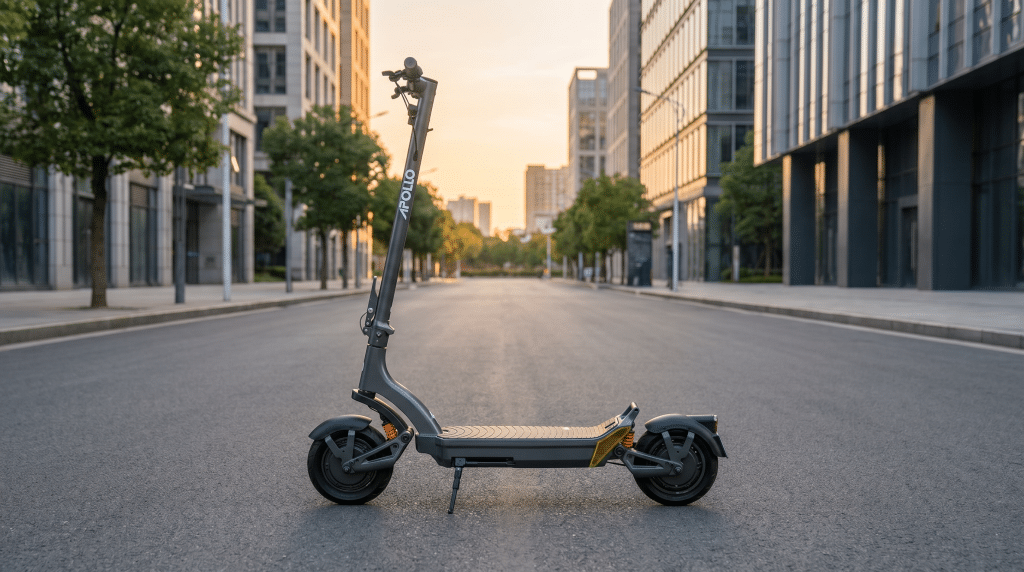
The Best Overall Scooter For Most Riders
- Top Speed: ~32 mph
- Claimed Range: ~43 miles
- Weight: ~65 lbs
- MSRP: ~$1299
- Motors: Dual 500W motors
- Suspension: Dual spring suspension
- Tire Size: 10″
- Brakes: Drum + regenerative braking
- Standout Features:
- Self-healing tires
- Strong regen braking
- Excellent ride stability
- Integrated turn signals
- Balanced performance
Honestly, the Apollo City is probably still the best-balanced scooter Apollo makes.
This scooter lands directly in the current industry sweet spot:
- Fast enough to feel exciting
- Stable enough for daily commuting
- Portable enough to still live with
- Comfortable enough for rough roads
- Powerful enough for real hills
And importantly:
it doesn’t become absurdly heavy.
Because once scooters start crossing ~80-90 lbs, portability falls off a cliff.
Compared to competitors in the premium commuter category:
- Better app integration than most
- Better lighting than average
- Smoother regen braking tuning
- More refined throttle response
- Better overall ride polish than many spec-focused competitors
The City feels intentionally tuned instead of just being built around peak wattage numbers.
Apollo Explore 2

The Long-Range Commuter
- Top Speed: ~31 mph
- Claimed Range: ~40-50 miles
- Weight: ~60 lbs
- MSRP: ~$849
- Motor: Powerful single rear motor
- Tire Size: 10″
- Suspension: Dual suspension
- Best For:
- Longer commutes
- Riders prioritizing range
- Stable high-speed commuting
The Explore lineup has always been one of Apollo’s most underrated categories.
While the City tends to get more attention, the Explore has historically focused heavily on:
- Range-per-pound
- Stability
- Ride comfort
- Simpler ownership experience
Compared to the City:
- Slightly less aggressive acceleration
- Slightly simpler tuning
- Better efficiency
- Lower overall complexity
- More commuter-oriented personality
This is the kind of scooter that appeals to riders who care more about smooth dependable transportation than aggressive launches.
Apollo Phantom 2.0

The Enthusiast Scooter
- Top Speed: ~44 mph
- Claimed Range: ~56 miles
- Weight: ~102 lbs
- MSRP: ~$2099 depending on sales
- Motors: Dual high-output motors
- Suspension: Quad suspension system
- Tire Size: 11″
- Brakes: Hydraulic disc brakes + advanced regen
- Standout Features:
- Extremely aggressive acceleration
- Quad suspension setup
- Upgradeable electronics platform
- Enthusiast-focused tuning
The Phantom is where Apollo stops pretending to build commuter scooters.
This thing is built for enthusiasts.
Compared to the City:
- Much faster
- Much more aggressive
- More acceleration-focused
- Less commuter-oriented
- More playful and raw
The Phantom has been one of the most recognizable enthusiast scooters in North America for years because it balances:
- Serious performance
- Strong ride quality
- Reasonable portability
better than many giant hyperscooters.
At ~102 lbs, it’s still heavy… but not completely insane for a scooter capable of 50 mph. And when you are going fast, that extra heft actually helps stabilize your ride a bit.
Apollo Phantom Stellar
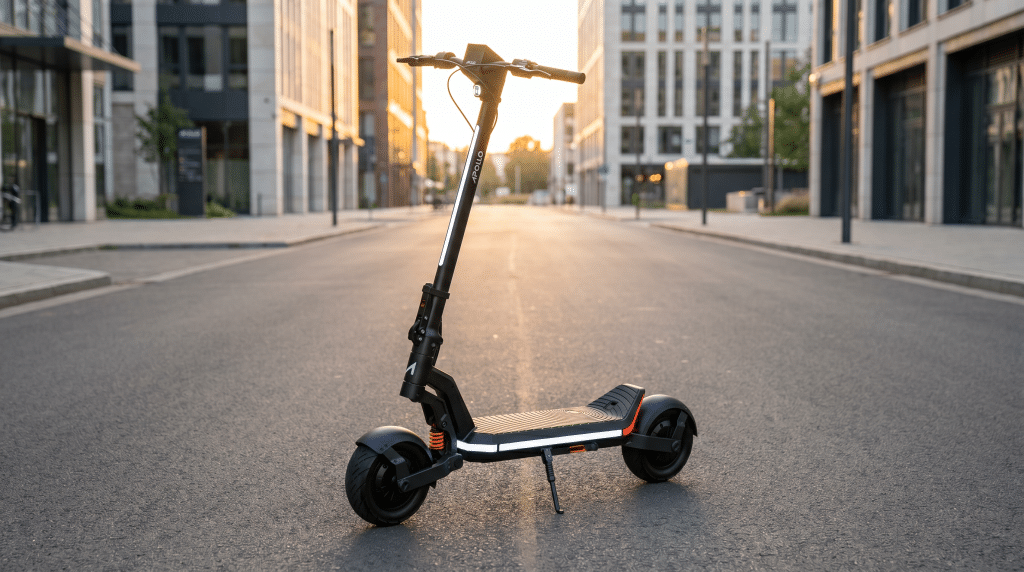
Apollo’s Ultimate Luxury Hyperscooter
- Top Speed: ~50+ mph
- Claimed Range: ~60+ miles
- Weight: ~107 lbs
- MSRP: ~$2099+
- Motors: Dual 1750w high-output motors
- Suspension: Premium adjustable suspension
- Tire Size: 11in x 4in
- Brakes: Hydraulic disc + advanced regen braking
- Standout Features:
- Massive integrated lighting system
- Premium chassis refinement
- Advanced braking feel
- Luxury ride quality
- High-speed stability
The Phantom Stellar feels like Apollo taking everything they’ve learned over the past six years and pushing it into one flagship machine.
And honestly, it represents Apollo’s overall philosophy pretty well.
Because on paper, there are scooters with:
- Higher peak wattage
- More insane acceleration
- Higher top speeds
- Huge range potential
But Apollo consistently prioritizes:
- Ride refinement
- Stability
- Lighting
- Safety systems
- Braking behavior
- Overall polish
The Stellar feels much closer to a premium, purpose built EV product rather than a garage-built hyperscooter with LEDs zip-tied onto it like a lot of other fast scooters out there.
That refinement matters a lot once scooters start approaching motorcycle-like speeds.
The downside?
Anything approaching 100+ pounds stops being remotely portable.
This is a full enthusiast machine.
Quick Apollo Comparison Table
| Model | Top Speed | Claimed Range | Weight | MSRP | Motor Setup | Best Feature |
|---|---|---|---|---|---|---|
| Apollo Dash | 25 mph | 20-25 mi | 43 lbs | ~$649 | Single 600W | Lightweight portability |
| Apollo Go | 28 mph | 30 mi | 46 lbs | ~$849 | Dual 350W | Dual motors under 50 lbs |
| Apollo City | 32 mph | 43 mi | 65 lbs | ~$1299 | Dual 500W | Best overall balance |
| Apollo Explore 2 | 31 mph | 40-50 mi | 60 lbs | ~$849 | Single 750W | Long-range efficiency |
| Apollo Phantom 2.0 | 44 mph | 56 mi | 102 lbs | ~$2099 | Dual 1560W | Enthusiast acceleration |
| Apollo Phantom Stellar | 50 mph | 60+ mi | 107 lbs | ~$2899+ | Dual 3000W | Luxury hyperscooter refinement |
Which Apollo Scooter Should You Actually Buy?
Here’s the simplified version:
- Need maximum portability? → Apollo Dash
- Want compact dual-motor dual-suspension fun? → Apollo Go
- Want the best overall commuter? → Apollo City
- Want efficient long-range commuting? → Apollo Explore 2
- Want aggressive enthusiast performance? → Apollo Phantom 2.0
- Want the ultimate flagship experience? → Apollo Phantom Stellar
After testing Apollo scooters for the better part of six years, one thing is pretty clear:
Apollo’s biggest strength isn’t necessarily building the most outrageous spec-sheet scooters in the world.
It’s building scooters that feel polished, intentional, and refined in real-world riding.
And honestly, for most riders, that matters more.
Full Electric Scooter Guide reviews, range tests, acceleration tests, braking tests, and real-world comparisons on the latest Apollo lineup are coming soon.
Ride Safe
Electric scooters can be dangerous and are intended for responsible adult riders only. Always wear a properly fitted helmet, obey local laws, and ride within your skill level and local regulations.
Affiliate Disclosure
This article contains affiliate links. If you purchase through our links, Electric Scooter Guide may earn a commission at no additional cost to you. Our reviews and opinions remain independent and based on hands-on testing and real-world riding experience.