Updated June 1, 2026
Looking for a scooter that won’t break the bank but still delivers real performance? I pulled ten of the best electric scooters under a thousand bucks—tested numbers only—to find which ones give you the most speed, range, and fun for your money.
What’s up riders, Ramier here with Electric Scooter Guide (ESG). Below you’ll get verified data from ESG-style track and range tests so you know exactly what’s real, what’s hype, and what’s worth your wallet.
Table of Contents
Top Picks at a Glance
- Best Lightweight Commuter: VMAX VX5 Pro GT — dependable, portable, UL certified.
- Best for Beginners: Segway E3 Pro — super stable with real-world comfort range.
- Best Hill Climber: Inmotion Climber — dual motors, stellar grade performance.
- Best Smart Commuter: Apollo Explore 2.0 — app tuning + plush suspension.
- Best Budget Off-Roader: Segway ZT3 Pro — hybrid tires, real suspension, UL2272.
- Fastest on a Budget: AUSOM L2 Max — wild top speed; experienced riders only.
- Best Waterproof Refinement: Apollo Go — IP66, premium feel, great software.
- Longest Range (Single Motor): VMAX VX2 Pro GT — near-30-mile verified range.
- Best Gateway to Performance: GOTRAX GX1 — dual motors, hydraulic suspension.
- Best Value Seated Option (HM): EMOVE Roadrunner SE — compact, comfy, unique.
Comparison Table
Tested numbers refer to the data provided from ESG-style measurements and real-world loops.
| Model | Price | Top Speed (tested) | 0–15 mph | Range (tested) | Weight | Motors | IP/Cert | Brakes | Highlights |
|---|---|---|---|---|---|---|---|---|---|
| VMAX VX5 Pro GT | $549 | 18 mph | — | 23.4 mi | 36.8 lb | Single | IP54 + UL | Front drum + regen | Ultra portable, climbs 10% grade |
| Segway E3 Pro | $599 | ~19 mph | 0–10 in 4.3 s | 10–12 mi | — | Single | — | — | Dual suspension, 10″ tires, beginner-friendly |
| Inmotion Climber | $699 | 24.1 mph | 0–15 in 3.5 s | 21.4 mi | 47 lb | Dual 450 W (1,500 W peak) | IP56 | Disc + regen | 25% hill in 11.2 s |
| Apollo Explore 2.0 | $849 | 25 mph | 0–15 in 4.5 s | 21.6 mi* | — | Single | — | — | App tuning, triple-spring suspension |
| Segway ZT3 Pro | $849 | 24.7 mph (Boost) | 0–15 in 2.8 s | 20.5 mi | 66 lb | Single rear | IPX5 + UL2272 | — | 25% hill in 9.6 s, 11″ hybrid tires |
| AUSOM L2 Max | $899 | 40+ mph | — | ~20 mi (aggressive) | — | Dual 1,000 W | — | ~11.5 ft 15→0 | Budget rocket; not for beginners |
| Apollo Go | $849 | 26.5 mph | 0–15 in 4.8 s | 15.8 mi | 46 lb | Dual 350 W | IP66 | RBS regen + rubber rear | Premium refinement |
| VMAX VX2 Pro GT | $999 | 24.4 mph | — | 29.5 mi | 45 lb | Single | IPX6 + UL | Drum + regen | Longest real range here |
| GOTRAX GX1 | $999 | 30 mph | — | — | 74 lb | Dual 600 W | — | — | Dual hydraulic suspension; hill 9.4 s |
| NIU KQi 200F(HM) | $649 | 19 mph | 0–15 in 10 s | ~14 mi (235 lb rider) | 44 lb | Single | — | Front drum + regen | Premium feel for price |
| EMOVE Roadrunner SE(HM) | $849 | 22 mph (tested) | — | 14.7 mi | 50 lb | — | — | Disc F/R | Seated, 14″ tires, front fork |
* 21.6 mi on a hilly loop with a 235 lb rider.
In-Depth Reviews
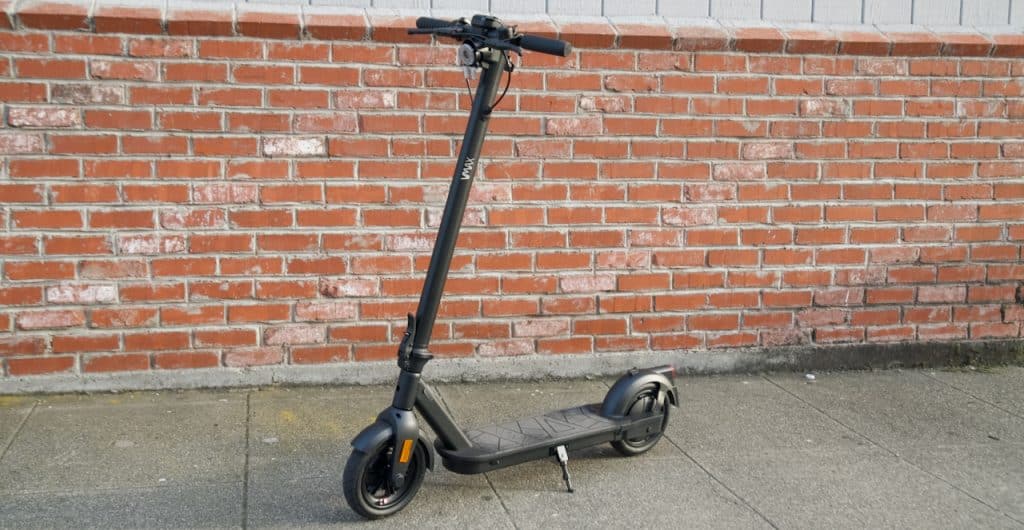
1) VMAX VX5 Pro GT — $549 | Lightweight Commuter King
Tested highlights: 18 mph top speed; front drum + rear regen braking; IP54, UL certified.
Best for: Students and short-range commuters who want reliability over flash.
VMAX VX5 Pro GT
Why it’s great: Swiss-designed simplicity that nails the daily ride. At just 36.8 lb, it folds quickly, tucks under a desk, and still handled a 10% grade while delivering 23.4 miles on one charge.
Pros
- Ultralight and portable
- Real range for its class
- UL certification + water resistance
Cons
- Modest top speed
- No advanced suspension
2) Segway E3 Pro — $599 | Stable and Beginner Friendly
Why it’s great: Classic Segway stability at a friendly price.
Best for: First-time riders prioritizing comfort and control.

Segway E3 Pro
Tested highlights: ~19 mph top speed; 0–10 in 4.3 s; 10–12 mi real-world range. Dual suspension + 10″ tires smooth city cracks, and the integrated lights keep you visible.
Pros
- Very forgiving handling
- Quiet, quick-folding, confidence-inspiring
Cons
- Shorter range than sportier rivals
- Not aimed at speed seekers
3) Inmotion Climber — $699 | The Hill Champion
Why it’s great: The cheapest scooter here that genuinely feels powerful on grades.
Best for: Riders in hilly neighborhoods who want dependable climbing without crossing $700.

Inmotion Climber
Tested highlights: Dual 450 W motors (up to 1,500 W peak), 24.1 mph top speed, 0–15 in 3.5 s, and 25% hill in 11.2 s. 21.4 mi tested range, 47 lb, IP56, disc + regen.
Pros
- Best-in-class grade performance
- Strong acceleration
- Solid range and weather resistance
Cons
- No suspension (rides firm)
- Heavier than commuter-lite models
4) Apollo Explore 2.0 — $849 | Smart Commuter with Real Range
Why it’s great: Premium tech without the premium price.
Best for: Daily riders who value comfort and app-based customization.

Apollo Explore 2.0
Tested highlights: 25 mph top, 0–15 in 4.5 s, 21.6 mi on a hilly loop with a 235 lb rider—excellent efficiency. Self-healing 10″ tires, triple-spring suspension, and the Apollo app for tuning acceleration, regen, lights, and ride modes.
Pros
- Tunable performance via app
- Comfortable suspension
- Quiet, refined ride
Cons
- Single motor limits all-out punch
- Heavier than ultralight commuters
5) Segway ZT3 Pro — $849 | Off-Road Performance on a Budget
Why it’s great: Segway build with real trail capability.
Best for: Weekend dirt paths and weekday streets with one scooter.

Segway ZT3 Pro
Tested highlights: Single rear motor but 24.7 mph in Boost, 0–15 in 2.8 s, 25% hill in 9.6 s, 20.5 mi range, 66 lb, IPX5, UL2272. Front/rear coil suspension + 11″ hybrid tires for mixed terrain.
Pros
- Legit off-pavement chops
- Strong acceleration for a single motor
- UL2272 certification
Cons
- Heavier chassis
- Not as nimble in tight city carry
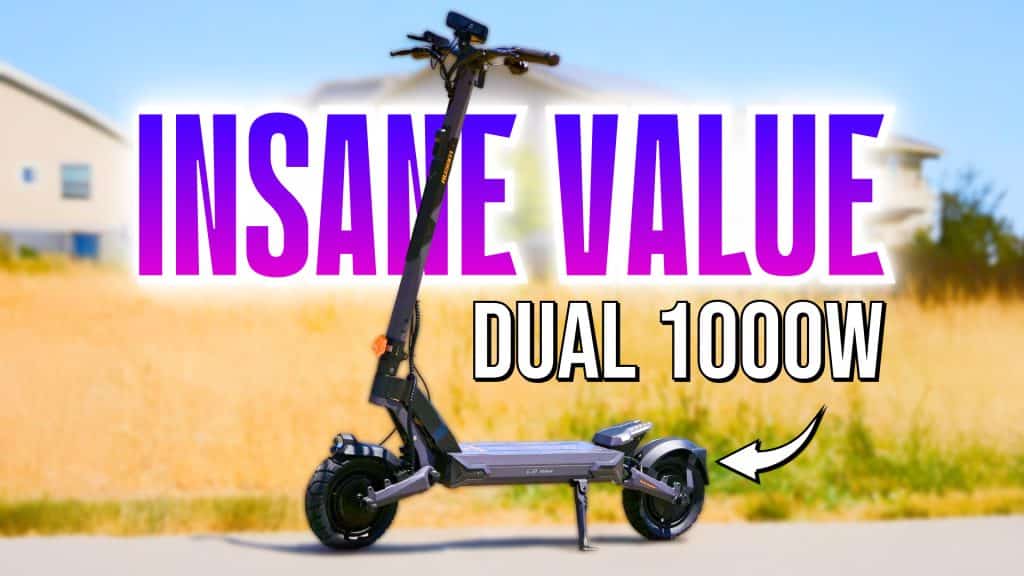
6) AUSOM L2 Max — $899 | Budget Dual-Motor Thrill
Why it’s great: A beast in budget clothing.
Tested highlights: Dual 1,000 W motors and a 40+ mph top speed—fastest here. About 20 mi of range under aggressive riding and strong braking (~11.5 ft from 15 mph).
Best for: Experienced riders chasing raw power without spending two grand.
AUSOM L2 Max
Tested highlights: Dual 1,000 W motors and a 40+ mph top speed—fastest here. About 20 mi of range under aggressive riding and strong braking (~11.5 ft from 15 mph).
ESG50applied at checkoutPros
- Extreme speed-per-dollar
- Serious acceleration and braking
Cons
- Not beginner-friendly
- Heavier and less commuter-friendly
Always wear proper protective gear. Many municipalities restrict speeds on public paths.
7) Apollo Go — $849 | Premium Refinement + Features
Why it’s great: Waterproofing and polish under a grand.
Best for: Riders who want top-tier build and software as much as speed.

Apollo Go
Tested highlights: Dual 350 W motors to 26.5 mph, 0–15 in 4.8 s, hill in 12.1 s, 15.8 mi range, IP66 waterproofing, RBS regen, rubber rear suspension, 46 lb.
Pros
- Excellent weather sealing (IP66)
- Refined ride and controls
- Lighter than many dual-motor peers
Cons
- Shorter range than class leaders
- Less “wow” speed than performance specials
8) VMAX VX2 Pro GT — $999 | Long-Range Single Motor
Why it’s great: Single-motor efficiency done right.
Best for: Daily commuters who value distance and durability over brute force.

VMAX VX2 Pro GT
Tested highlights: 24.4 mph top speed and a massive 29.5 mi range. 45 lb, IPX6 + UL, 10″ tubeless, drum + regen brakes.
Pros
- Longest tested range under $1,000
- Weather-ready, low-maintenance brakes
- Balanced weight for portability
Cons
- Moderate acceleration
- Single motor limits hill sprints
9) GOTRAX GX1 — $999 | Gateway to Performance
Why it’s great: GOTRAX’s step into real performance.
Best for: Riders who want a taste of performance without going full hyper-scooter.

GOTRAX GX1
Tested highlights: Dual 600 W motors, dual hydraulic suspension, 30 mph top speed, hill 9.4 s. 74 lb—heavy, but you’re paying for suspension and dual motors.
Pros
- Strong hill and top-speed capability
- Real suspension for rougher surfaces
Cons
- Hefty to carry upstairs
- Brand-new riders may find it overkill
Honorable Mentions

NIU KQi 200F
19 mph, 0–15 in 10 s, ~14 mi range with a 235 lb rider (lighter riders go farther). 44 lb, front drum + rear regen, 10″ tubeless tires.

EMOVE Roadrunner SE
Compact seated scooter: 50 lb, 22 mph top speed (2 mph over vendor spec), 14.7 mi range. 14″ pneumatic tires, front suspension fork, disc brakes F/R.
How We Test
- Speed & Acceleration: Measured with GPS-timed runs on flat pavement, repeating for consistency.
- Range: Real-world loop including stops, starts, and mild grades; rider weight noted where relevant (e.g., 235 lbloop data).
- Hill Climb: Timed grades (up to 25% where specified) from a dead stop when noted.
- Braking: Measured stopping distance from a fixed speed (e.g., 15→0 mph).
- Ride Quality: Assessed across pavement conditions for vibration, suspension compliance, and tire behavior.
- Safety & Durability: We note UL certifications and IP ratings when provided.
Buying Advice
1) Start with your route. Short city hops? A lightweight commuter like the VMAX VX5 Pro GT or Segway E3 Prokeeps life simple. Longer daily rides? The VMAX VX2 Pro GT stretches your range. Hilly terrain? The Inmotion Climber is the standout.
2) Decide on speed vs. comfort. If you want pure thrill under $1,000, the AUSOM L2 Max and GOTRAX GX1 deliver. Prefer comfort and tuning? Apollo Explore 2.0 and Apollo Go bring app control and suspension.
3) Mind the weight. If you’ll carry it upstairs or on transit, sub-50 lb helps: VX5 Pro GT (36.8 lb), Apollo Go (46 lb), VX2 Pro GT (45 lb).
4) Check weather rating and safety. Higher IP ratings (e.g., IP66 on Apollo Go, IPX6 on VX2 Pro GT) and ULcertifications add daily peace of mind.
5) Match brakes and tires to your roads. Drum + regen is low-maintenance for commuters; hydraulic/mechanical discs bite harder for speed. Larger tubeless tires help with flats and comfort.
FAQs
Are these scooters legal where I live?
Rules vary by city and country—check local speed limits, bike-lane access, lighting, and helmet requirements before riding.
How much range will I really get?
Rider weight, temperature, tire pressure, terrain, and speed make a big difference. Expect more range if you’re lighter and ride in eco modes; less if you’re heavier or ride fast.
Do I need suspension?
If your roads are rough or you ride longer distances, suspension (Segway ZT3 Pro, Apollo Explore 2.0, GOTRAX GX1) reduces fatigue. On smooth pavement, big tubeless tires can be enough.
What safety gear should I use?
At minimum: a certified helmet, gloves, and lights. For higher-speed models like the AUSOM L2 Max, consider a full-face helmet and additional protection.